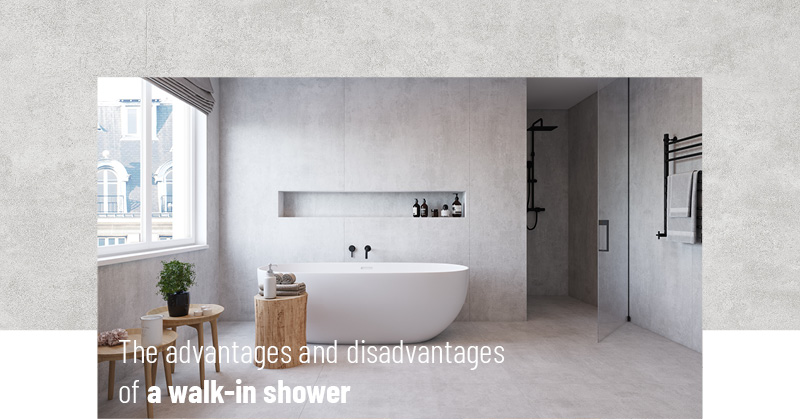
Modern, elegant and practical: a walk-in shower may well be the perfect solution for your bathroom. With no threshold to step over or edge to stub your toe on, it combines functionality with style. But does a walk-in shower truly have only advantages? Impermo outlines the main pros and cons, along with some practical tips for achieving the best result.
The pros of a walk-in shower
Safety first
For families with young children or for those who are less mobile, a walk-in shower is an excellent choice. With no threshold or raised edge, it significantly reduces the risk of tripping and falling—especially helpful for older people.
Spic and span
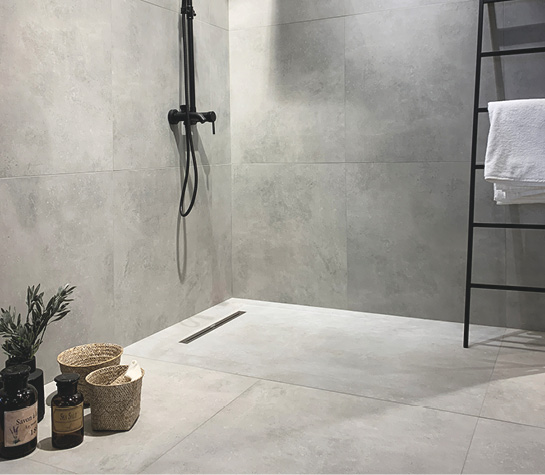
Because a walk-in shower has fewer corners and edges where dirt can build up, it’s far easier to clean compared to a traditional shower tray. If you also opt for low-maintenance tiles like the ceramic Tilestone Shape Cement, you’ll save even more time and effort.
Luxury at home
A walk-in shower can be fully tailored to match the style of your bathroom. This creates a calm, unified look and makes the space feel larger. From the bold Roca Basel Caliza to the timeless Glamstone Beige or the striking Tilestone Gré Grigio, you can choose the finish that suits your taste and enjoy every bathroom moment.
Hip to be square
Whether square, rectangular or even twice the size of your current shower tray, walk-in showers give you complete flexibility. Choose the dimensions that fit your design and create an open, spacious feel with enough room to shower comfortably—even for two.
Super tip from Impermo
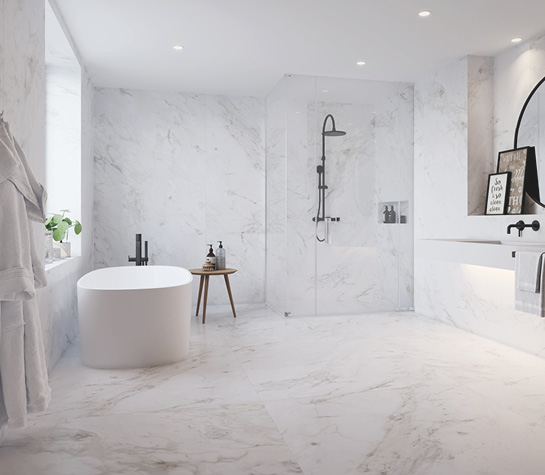
This year’s biggest trend? Ceramic slabs with a luxurious marble effect: Ultimate Carrara. These large-format tiles (120x240 cm) feature a crystal-white background with subtle light-grey veining. They’re stylish, low-maintenance and bring unique character to your bathroom.
The cons of a walk-in shower
Splish, splash
An open walk-in shower can lead to water spreading across the bathroom floor if the drain doesn’t work fast enough. You may also get splashes outside the shower area. Thankfully, this can be solved easily with a proper drain system, a glass panel or even a simple shower mat.
Slippery slope
As with any shower, the tiles can become slippery when wet. To prevent accidents, consider applying an anti-slip treatment or installing textured tiles. Tiles like Tilestone Shape Cement and Shower Concrete Grey are specifically designed to be slip-resistant.
Bathroom climate
Without a glass wall, shower curtain or partition, the shower can feel a little cooler. Inadequate ventilation may also cause the bathroom to stay humid and, in the worst case, encourage mould growth. Ensure good ventilation or open a window while showering.
Technical conditions
Installing a walk-in shower requires careful preparation and expertise. The drain must be built into the floor, and the subfloor needs to be fully waterproofed. Want to know more about how to do this? Check out Impermo’s dedicated post.
Frequently asked questions
Is a walk-in shower safe?
Yes, thanks to the absence of thresholds or edges, the risk of tripping is greatly reduced. This makes it particularly safe for children and older adults.
How easy is it to maintain a walk-in shower?
Walk-in showers are very easy to keep clean. With no edges or corners, there's less chance for dirt to build up. Choosing low-maintenance ceramic tiles makes cleaning even easier.
How can I prevent my bathroom from getting wet?
Make sure you have efficient drainage, consider installing a glass screen, or use a shower mat to stop water from splashing.
Do I need special tiles?
Anti-slip tiles are recommended to help prevent slipping. Tiles like Tilestone Shape Cement and Shower Concrete Grey are specifically designed for walk-in showers.
What technical aspects should I consider?
The drainage system needs to be integrated into the floor, and the subfloor must be fully waterproofed. This requires expert knowledge and thorough preparation.